Novels that inspire, inform, and question

MY HOPE IS TO INSPIRE WITH A MAP SHOWING MANY PATHS ON OUR JOURNEY TO FIND TRUTH
The Novels
2084 Coming Soon
Born in Revolution
Born in Revolution

Ai, immortality, genetic engineering, drugs
The World of the future.
What is Human?
Will the gods be merciful or merciless
Born in Revolution
Born in Revolution
Born in Revolution
Born in Revolution
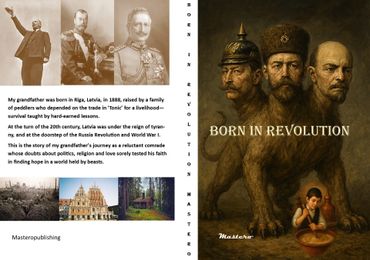
Kaiser, Czar, Lenin
My grandfather's world
Survival in a wilderness of beasts.
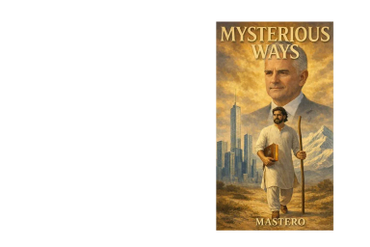
Mysterious Ways
Born in Revolution
Tentacles of Love and Ambition
Mysterious Ways
Football stars, Princess, Angel
Detours from golden paths.
Converted by Mysterious Ways
Tentacles of Love and Ambition
Tentacles of Love and Ambition
Tentacles of Love and Ambition
Ten rich, famous, brilliant, and politically charged guests take a cruise to the Galapagos and discover the challenge of mastering Mother Nature
Before the Bible
Tentacles of Love and Ambition
I Wasn't a Hippie
The history of the Old, New Testaments
The truth of Religion
The history of Civilization
Sir Henry Austen Layard
The first Archeologist and rebellious humanist
I Wasn't a Hippie
Tentacles of Love and Ambition
I Wasn't a Hippie
From Sutton Place to Woodstock to the wild west--the Prince turned pauper turned son of boss suddenly finds himself on trial for murder.
Past / future/ present --- Politics, religion, philosophy,technology

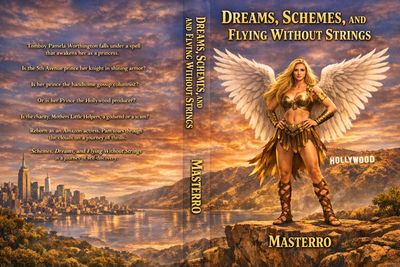
Dreams, Schemes and Flying Without Strings
Romance
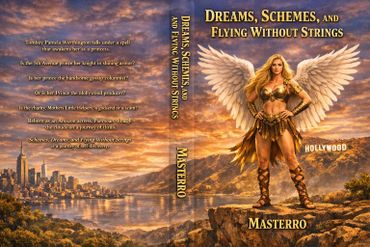
Pamela Worthington is almost six feet tall believes she's a mutant giraffe
Tomboy to Princess
Under the spell of a Prince - his Temple a castle - Fifth Avenue the treasure
Dreams
The spell fades and reality is a penniless 26 year old princess is lost
Schemes
Her new prince is a guide to the world of Hollywood, fame, and glittter but all is not as it seems.
Flying without Strings
Freedom is found as an actress turned stuntwomen.
A journey of discovery that follows a maze of scams, deceit, hope, faith, and betrayal.
Amazon daredevil, princess or under a spell?
Born in Revolution

Riga, Latvia - circa 1900
My grandfather was raised in the wilderness outside of Riga. His family taught him how to survive in a wilderness of predators. Trained as a peddler, inheriting his Bubbe's secret recipe for fine Vodka, bred to navigate threat, challenges, and evil's temper with lies told with certainty. But all his skills and training are put to the test when he takes him on a detour into the wilderness of the Russian Revolution, World War I, and risking love in a cauldron of evil.
Czar Nicholas II
Tyrants are raised in the belief they are mortal gods, but Nicholas learns at a young age the perils of the throne, and it's from this state of paranoia that he unleashes the punishment of war.
Kaiser Wilhelm II
Born with a disfigured arm, the prince was raised to hide his insecurities behind a show of bravado. Wilhelm envies his grandmother's empire and is determined to build an empire as great as Britain's.
Vladimir Lenin
His brother is hanged as an anarchist, and the young brother, Vlad, takes up the cause--Everywhere is a battlefield in the fight against tyranny.
Mrs. Dayan, Ruth, Mother, Bubbe, and Mae.
The women in my grandfather's life who blessed him the reward of love and the courage to fight on.
Find Your Next Favorite Read
At masteropublishing Bookstore, we curate a diverse collection of books to cater to every reading taste. From bestselling novels to niche titles, we have something for everyone. Browse our shelves or search online to find your next great read.
The Future is Coming Soon

2084
Ai pursues genetic engineering and the lead scientist becomes concerned about whether the latest prototype is Human? Set free from the isolation of his lab and the mind-controlling drug, Pronex," Team Leader explores a world adapting and evolving, but without an answer as to direction.
Could be 2026
We are evolving at breakneck speed. Technology, social mores, and materialism infiltrate humanist traditions. This book asks the question --What is Human?
Brave New World meets 1984-- meets The Great Gatsby and beyond. Nature losing control of evolution.
Team Leader's journey of exploration is one part philosophy, one part adventure, and two parts --"What if?"
A mystery wrapped inside the question of whether AI is god and whether God is merciful or merciless.
Mysterious Ways

The king of Southville, an evangelist warrior, and a civil war in Islam.
South Carolina was settled by intrepid and courageous British pioneers in a quest to forge a kingdom of their own making. Hardened by the challenges of survival, and on the backs of slaves and the bounty of fertile soil, they built a kingdom and left to their descendants the passion to defend it.
Inheriting a kingdom
The newly crowned king of Cipher Global defends his kingdom by any means.
Mark Johnson, Jimmy Taylor, Pamela Christie, Tara Warren - the disciples of morality and warriors fo
Born and raised to be good Christians, our cast includes star athletes who take opposite paths, a princess with a social conscience, who is torn between loyalty and romance, and a brilliant biologist who wears the wings of an angel but struggles to save her warrior from the despair of a fallen hero.
Reincarnated as a CIA operative in Pakistan, Mark leads our warriors on a crusade to turn swords into plowshares.
Politics, Religion, and a Love Story.
Is there an alternative to war in evangelism?
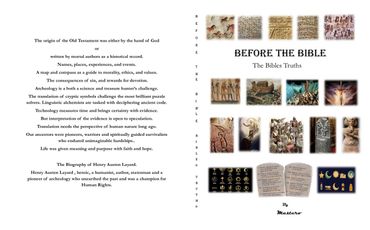
Before the Bible - The Bible's Truths

Mesopotamia, Sumeria, Egypt, the empires of civilization
Religion has its roots long before there was an Old Testament. We follow the path of an early archeologist as he searches for evidence of the Bible's Truth. Sir Henry Austen Layard was a 19th century explorer who stumbles upon the role of archeologists and amasses a trove of evidence that tells the story of our Bible's origin.
Language is a code with many layers.
Cave paintings, sculpture, tools, and artifacts evolve into alphabets, and it's from the archives of ancient libraries that the roots of religion are found.
Archeologist, explorer, adventurer, hero, spy, humanist, author, artist, diplomat, linquist, and sav
Henry Austen Layard
1850 Mosul, Iraq
Layard abandons London for the wilderness of the Near East, intent on uncovering the evidence of the Bible's Truths. His story is one of adventure -- the Original Indiana Jones -- a warrior with empathy, a diplomat who used charm, an open mind, and humanist empathy that fosters strong bonds with the natives. A life spent in battle for Human Rights against no one less than Queen Victoria, aided and abetted by a Jew converted to Christianity, and becomes Prime Minister, Benjamin Disraeli.
Layard's life was enriched by a network of the Who's Who in 19th-century influencers. He was at the epicenter of world events that led to World War, the end of the Ottoman Empire, and was outspoken as a Parliamentary Minister, about the price the world paid for the arrogance of British Imperialism--a lesson as valuable today as it was yesterday.
Assyira
The Assyrian Empire of 1000 to 600 AD - Babylon - Nineveh, Nimrod.
Thousands of clay tablets provide testimony by deciphered cuneiform
The translation of the ancient alphabet known as cuneiform unlocked the roots of religion as a factually based historical archive.
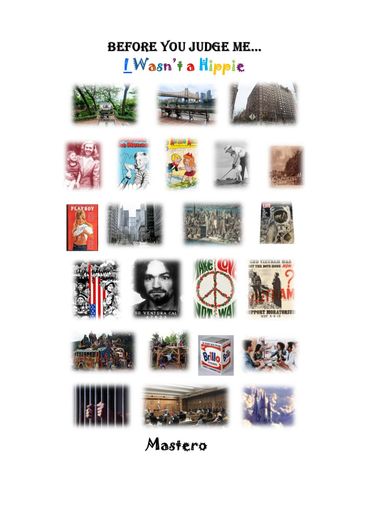
Before You Judge Me --- I Wasnt a Hippie

Circa 1970 Manhattan
If Holden Caulfield was Jewish, born in 1952 and not the forties, and instead of worrying about school, the meshuga prince goes down the rabbit hole of Vietnam, Hippies, whether to take LSD, whether to ask out his crush or settle for a sure thing, and why go to college when his one skill is as a bullshit artist; A prince destined to join the family business takes a detour.
Family Feud
The Rabbit Hole includes the misadventures of High School, the pomp of Manhattan society, gambling, sex, drugs and Woodstock, a stint in jail, the army and the battlefield of his family's business -- Shore Advertising.
Murder, Accident, Accidental Murder, Heat of Passion???
He's both a screwup and a charmer, but is he a murderer?
I Wasn't a Hippie Chapter One
Chapter One Backstory
I enter the cage and climb over Murphy’s shelf to my perch, open the notebook, and stare at a blank page. Desperate to escape the howling noise and sewer smell, I sharpen the broken pencil and try to find my earliest memory. Of course, I can’t remember getting my diaper changed or being fed by nipples, but I still have that tiny C-shaped scar on my forehead from jumping out of my crib.
My earliest memories are from the many accidents that followed, mostly at my playground. My neighborhood is tucked away at the farthest edge of a canyon of towering apartments lining ritzy 57th Street. Sutton Place Park is around the corner from our lobby, and it didn’t have swings or a jungle gym—only a sandbox where I fought off squirrels, pigeons, and thieving playmates with my pail and shovel. The one decent tree to climb was easier to climb up than down, but when I fell, it would only be a scrape, bruise, or cut, quickly patched with a band-aid or a kiss. The greater danger was falling off the edge of the cliff. The playground had a stone wall fortified with a curled iron railing meant to protect cowboys from falling into the cold swirling currents of the East River, but such an easily climbed fortress was lost on this four-year-old sheriff. It was only by the grace of god that my cowboy boots saved me. They were all torn up, two sizes too small, but I wouldn’t let her throw them away. Howdy Doody gave them to me. My mother took me to all kinds of stuff—like museums, shows, and concerts. The best was when Peter Pan flew over my head.
Anyway, a pirate ship was coming, I reached for my gun, slipped, and as I slid toward my doom, my boots got caught between the iron bars, and I was saved from falling fifty feet into the River—the first of my many nine lives.
Yet, even after a spanking, tears, and the threat of “No more playground,” the lesson didn’t stick, and a moment later, I was racing around the sandbox on my tricycle and cut my chin bad enough to need stitches.
She held me tight while Dr. Berenberg sewed the deep cut with a needle and thread—a frightening and yet fascinating event. From somewhere beyond the pain, I heard my mother say, “Thank god Douglas is made of rubber,” and I still think she was saying that I’m indestructible, and accidents just happen.
I didn’t belong in their world. I was a curious explorer cocooned in a nest of expensive grown-up stuff. Things got broken, and I didn’t purposely set fire to my bed—matches were an experiment.
Then came school and more rules. I should have known something was up when my mother announced to her squad of mothers, nannies, and grannies, “Kindergarten starts Monday.”
Mrs. Feldman grabbed my cheeks. “The sheriff is leaving town.”
Clueless about clues, I didn’t realize that the Mickey Mouse briefcase, box of crayons, tins of clay, and a Roy Rogers lunch box were bribes. She kept telling me, “Kindergarten is going to be a party with cookies and lots of playmates.”
My mother teetered between tearful hugs and laughter as we raced past the familiar palace guards who waved and saluted when she announced, “He’s going into Kindergarten!” We hurried past the Hole in the Wall deli, Chemical Bank, Gristedes, Sal’s barbershop, and Bernstein’s drugstore and entered uncharted territory. There were no doormen, no fancy lobbies, no trees or gardens, only a row of stores crammed with all kinds of stuff that had funny smells.
We crossed the street, and I noticed a herd of kids being led into this big fort. Before I could ask what was going on, my mother pulled me into a tight hug, gave me a long kiss on my forehead, and then pushed me into the arms of an old lady who was shepherding the herd of scared lambs inside the fort. By the time I got scared enough to cry, she had disappeared. Before I could run, the shepherd cast her spell with a motherly smile, took me by the hand, and with promises of cookies, lured me through a giant front door into the musty old building where I was separated from the herd and prodded into another room where I’m greeted by “Miss Lori,” who was as pretty as Snow White. She sat me at a strange desk where she performed magic by lifting the top to reveal lots of paper, and then opened my briefcase and put the crayons, clay, and lunch box in the secret drawer, but after she closed the top, I saw lots of scratches and cried, “I didn’t do it.”
It was a room full of pirates, cowboys, and princesses in various states of panic, celebration, and tears, where Snow White cast a spell of happiness with a potion of chocolate milk, but then I discovered that school was a prison. I wanted to go home but was pulled away from the door. “You can’t leave.” I was ordered to sit still and pay attention. When I ran for the blocks during ‘rest period,’ I earned a punishment of no cookies, clay, or paint. Snow White became the wicked witch, and Principal Auerbach, the Big Bad Wolf. He told me, “Time to be a big boy.” The lesson was taught with a smile, but with a firm grip on my wrist.
Then came First Grade, and suddenly there were marks on the blackboard that looked like the scratches on my desk. When I didn’t pay attention, Old Mrs. Goldberg looked me in the eye, “You must learn, or you’ll be a bum,” and from my questioning stare, she explained, “No home with a bed or food on the plate,” but I still didn’t understand. Her lesson was lost on a boy living in a dream world where steak, lamb chops, roast beef, hamburgers, chocolate cake, and ice cream were always on the plate, and my bed was soft.
It was the first day of Second Grade, and my mother took me downstairs, pointed west, and ordered me, as if making a command, “You can take yourself to school.”
I cried, scared, “I’ll get lost.”
“You can’t get lost. It’s down the street.”
They had just opened PS 59, but it wasn’t just down the street; it was way up two very long streets, and the danger wouldn’t be getting lost or run over by a stampede; it was getting past Bernstein’s Drug Store. I was on Mr. Bernstein’s ‘Wanted Poster.’
It was a dime for a Superman comic but a quarter for the Justice League, and I only had a quarter and also needed a Milky Way. It was impossible to choose. It had the Flash, Green Lantern, and Wonder Woman, all battling Lex Luthor, and I got caught sneaking the Milky Way into my pocket.
Mr. Bernstein spanked me, didn’t hurt, but took the Milky Way, the Justice League comic, and kept my quarter. He told me to tell my parents, but I was too scared to confess. I didn’t think he’d tell. I learned that grown-ups are squealers.
I was arrested by my mother and charged with theft, but she doubled the sentence because I was also guilty of withholding information. “As bad as lying.” What hurt most was her telling me that I was switched at birth— “I ordered a prince and got a pirate.” She’d scold me with these long lessons. “You don’t see what’s in front of you; you only see where you want to go.” She was right. I’d leap for a branch, only to come home with another wound.
My mother was once a nurse, so she knew something about wounds. She was nineteen when the war ended, and instead of going to the front lines, she cleaned bedpans and made beds at Bellevue. She would always add, “I thought I’d lose my mind.” Then she married the prince and picked me up at Saks a few years later. I overheard her on the phone telling someone, “I was going to have four, but Douglas turned out to be enough.”
My parents said I was lucky to grow up in the city. “We have whatever we want just down the street.”
And yes, the city has endless Main Streets lined with treasures, but you learn early on that toys, pizza, comics, candy, and popcorn are infectious temptations used as rewards, and my first lesson about money.
I wanted to live in my uncle’s mansion. The backyard would have a doghouse, swings, and my sandbox. You open the front door and enter your home. I’d have a heroic Collie named Lassie. I couldn’t have a dog. “All that hair, fleas, and god knows what,” so Mother got me a turtle, but it died a few days later. It might’ve drowned. I filled the tank and added soap because my mother said turtles are dirty: “Don’t play with it.”
The lobby was sacred. I wasn’t allowed to sit on the couch or touch any of the books on the bookshelf. If I were covered in mud, snow, or blood, the doorman would send me to the stinky service entrance lined with garbage cans. Mother told me, “The lobby isn’t our home.”
I also hated the elevator. I want to blame elevators for my claustrophobia. It was like a prison cell. You’d creep up twenty-five floors, and the worst part was being trapped with grown-ups who always asked the same question, ‘Have you been a good boy? ' You knew them, but our neighbors were strangers. I’d answer according to my mother’s script, “Of course, I’m a good boy. Accidents just happen.”
The streets are a dangerous maze. You always have to be on the lookout for red flashing lights and soul-jarring sirens. Our heroes let us know they’re on the job with blaring sirens, even in the middle of the night.
Temptations were everywhere. I was nine or ten when I found my father’s binoculars and discovered bosoms. The view from our windows was into our neighbors' windows across the street. They were mostly cooking, talking, watching television, or reading, but I was hooked on spying.
She caught me peeking, gave me that look, and groaned. The binoculars were gone, but so was my innocence. Being naughty was infectious. Mother tried to explain the birds and bees, “Girls have a place in their tummy where we grow a baby, and the bumps on our chest store milk to feed the baby.” She compared sex to learning how to drive: “You need to be a grownup, have gotten a license.” Her lesson was filled with threats: "You must go slow.”
My father wasn’t one for talking about sex: “Give a girl you like a kiss. You’ll figure out the rest.”
I thought I was protecting my parents by lying about stuff like playing hooky. I’d blame the other kid for starting the fight, but it was mostly because if I lost the game, I’d lose my temper and start wrestling, which was mostly fun until one of us got hurt. My mother would clean off the blood and scold me for being a bully.
My father only heard that I hated losing. He told me, “Winning is what it’s all about,” and bought me a barbell.
I had just blown out the twelve candles when he told me, “Next year, my boy becomes a man.” There was talk of a Bar Mitzvah.
Thirteen was the year of going to parties where you first had to sit through a service at the temple, and then I’d have to sit still while my friend read a million-year-old prayer in Hebrew. Given honor by the Rabbi, “A tradition as old as civilization. You extend the branch on a family tree we are rooted in.”
The girls cast magical spells that made us boys act silly, but I learned about the gifts when I went to my best friend’s Bar Mitzvah in Great Neck.
I met Jeff at camp. We were six and homesick until we became best friends. The rest of the year, we stayed in touch. Sometimes, he’d sleep over, and sometimes, I’d stay at his huge house. It had a pool, swings, and even a playroom that was so big you could fit my playground in it. I was invited to sleep over.
Jeff showed me a Playboy. He took it from the hiding place behind the books in his older brother’s room. I learned that bosoms came in all shapes. I asked Jeff, “What’s so special about these bosoms?”
“I don’t get it either, but I guess we feel funny looking at them because we don’t have them.”
His party was at some fancy restaurant called Patricia Murphy’s, which had the most beautiful gardens, colorful birds, even a waterfall, and a pond with big goldfish. A magician pulled flowers from a stick, and a bunch of girls made us feel like we were stupid boys by laughing at us. But it was when we got home, and I got ready for bed; I looked down from the top bunk and watched Jeff open envelopes stuffed with cash and checks, and decided I wanted a Bar Mitzvah.
My mother loved to throw parties, but the Rabbi at Emmanuel said I missed too many lessons and that I couldn’t read Hebrew.
I played hooky from Hebrew School because Central Park was across the street from the temple, and I loved to race my bike around the park. Early Sunday mornings, I had the city to myself. Maybe the Rabbi called, and perhaps she knew that I played hooky, but since she didn’t yell at me, maybe she didn’t mind.
My mother moved the ceremony to Central Synagogue because the Rabbi said he’d write my speech in English. The party was moved from the Plaza to the Waldorf. It was just down the street.
My father’s speech scared me: “I believe this timeless tradition validates thirteen as a turning point for boys to understand it’s time to be a man.” I thought being a man meant sex, money, and a car.
I kissed Patty Tessler at my party, and even though she did it on a dare, my friends laughed at me. I didn’t mind. It felt tingly. She pulled me in a hug and hugged me around the dance floor, and even though she was head taller, Patty said, “You’re my prince, and I’m your princess,” and leaned toward my lips.
I wasn’t ready for kissing. All I thought about was touching her two little bumps. Patty slapped me and ran off.
My mother tried to teach me a lesson about girls, but unfortunately, most of her lessons didn’t sink in, maybe because she was too nice. I often heard people say, “Your mother could be Doris Day, the movie star.” Doris Shore is also a pretty blonde with puffy blonde hair who plays the perfect hostess and dotes on her perfect husband. But then I messed things up by not being perfect—cute, but not perfect.
I saw all these books about fixing a crazy child on her nightstand. I read Chapter One. It was all about “Consequences.” I stopped at “Parents need to be the boss.” I knew the consequences for not behaving meant allowance, television, the car, and their glare.
It wasn’t my fault. Evil was all around. When we went to see a show on Broadway, she’d wrap her scarf over my eyes to block out the porn shops and hookers who lived in Time Square.
My mother thought I needed a lesson on being a teen and took me to see the Beatles at Carnegie Hall. But as a thousand girls screamed in hysteria, my mother shook her head, slumped in her chair, and just before they played “Love me Do,” I heard her cry, “God save me.”
First Chapter Preview "Born in Revolution"
CHAPTER ONE – Home – Oct. 1898
My grandfather’s story…
A shtetl is not a village. A shtetl has no tavern, no strangers, no general store. You survived as a farmer, hunter, and peddler, and rarely reaped what you sowed. Faith was hope for mercy. The reward was sharing in joy and neighbors bringing comfort when in misery. We were bonded by loyalty, but they’d bicker over what was right, sometimes with a swat from a hurtful temper, but trust was unquestioned, and a blessing soothed the debate.
Depending on what trouble you found, our home was a week or more east of Moscow. Three days west to Riga if at a good pace. It took sunrise to sunset to reach the Count’s tavern, inn, church, and general store. We faced harsh punishment if his tax wasn’t paid.
As a boy, I was shown to turn at the elm with four branches, follow the elm until reaching the spruce, and then over the hill to find the pond. The pond was where Uncle Moshe gathered his family and friends in their shtetl of four shanties.
We didn’t live near the pond. Poppa thought hiding in the forest was safer, with more hope than faith that our wilderness was a fortress. Our home was almost a hundred paces down a hidden path. Uncle Moshe argued to be close to the pond. “Why have to fetch water so far?”
Gramps and Poppa were bred by a fox. A fox is more cunning than a dog. A dog foolishly barks and gives chase without regard for the prey’s tricks. The fox hides, sets a trap, and only hunts defenseless prey. Gramps called his older brother a smart dog—quick to smell value and loyalty, but prone to take a foolish risk for an easier reward.
Uncle Moshe and my cousins Joshua and David also wanted out of Riga and followed Gramps to settle in this wilderness. They put their shanty between a patch of spruce and the pond. His trading partners, Mr. Hirsch and Mr. Kornicker, brought their wives and children to help with the harvest, and they also appreciated our calm and decided to stay.
It was a summer day. Warm enough to bring thirst with little effort. No dark clouds to suggest a storm was brewing, but the wilderness didn’t whisper those familiar sounds of nature, as it should. My older cousin, David, was setting traps near the patch of birch. He knew every critter, every path, and realized the unfamiliar sound was neither wolves nor bears and raced like a deer through the forest’s maze to warn us.
Poppa grabbed my arm and gathered the family to hide behind a wall of spruce. The storm was a fast-moving echo of thunder that shook the ground and our fears. Our escape came without a moment to spare.
Mr. Kornicker, whose violin can make you weep or dance, held his daughter, who was also my best friend. Ruth was two years older, never scared, and took me on adventures with her dreams.
Aunt Esther was an artist, and her husband, Harold—who preferred to be called Mr. Hirsch rather than Uncle Harold—showed little patience, more like a professor who taught us lessons by sharing his books and scolding us for not paying attention. He treated my little cousins, Mordecai and Ezra, like misbehaving dogs, but as the beasts descended on our paradise, he too was softened by fear—crouched to his knees, held his frightened boys and their mother for dear life.
Mamma took me in a hug, her hands covered my eyes, and whispered, “Don’t look!”
A wet summer thickened the spruce into a wall of prickly pine, but we were so close to the shtetl that a cough would give us away.
Cursed by my unmindful nature, I peeked between her trembling fingers, and through the tangle of branches, I was only able to catch a glimpse—and discovered that the Golem was not a fable.
I was six when Mamma cried out in horror— Golem!’ A word I had never heard. She was shaking so bad that it scared me to come out of hiding— “What is a Golem?
Mamma said I was cursed, “Possessed by curiosity.” I would spy on their grown-up talk, and while I didn’t understand all of what they were saying, I knew groans were worries, tears meant sadness, and laughter was about foolishness. She spanked me, not hard, not as if I was bad, but more like she was sad. “Her lie trembled in a whisper, “Golem is a fable.” But she said fable the same way Gramps said, “The forest is our fortress.”
I thought the Golems were bears or wolves, but as they came closer, it was five thick men wearing their skins. The warriors trampled our four shanties, slid off their horse and slashed what was left in the rapture of hate. The branches, skins, and straw that made a home were kicked away in search of plunder and tossed aside treasures whose worth was more in sentiment. The battle went on until they surrendered to our poverty. Cursed for having no gold or silver, they harnessed the one cow that didn’t run off, tied six goats to their horses, and then eyed our patch.
They came as predators trapping prey. We held our breath; so close, swords ready to cut through our wall of spruce.
The quiet before the storm was distracted by a nearby war cry.
Shouting came from near the pond.
Still holding our breath, Mamma still covering my mouth, they celebrated what we didn’t know but returned with no regard for seeking out worthless prey and showed their hate by setting torches to the rubble.
Czar Nicholas II was crowned six years after I was born and thought Jews and immigrants were a poison infecting his White Russia. Gramps said, “He rightfully suffered in fear of assassins.” He lost his grandfather to an assassin, and his father died while the playboy was enjoying the rewards of being an irresponsible younger prince. His older brother was to be czar but died of sickness at twenty. Nicholas took the throne at 27.
Even if the ransom were paid, Jews could no longer trade in alcohol, and why my family of bootleggers moved to the secrecy of the wilderness.
The pounding hooves faded as the cloud of smoke choked our breathing. Took a moment for the bonfire to wake us to the nightmare. It was an inch to sunset when we saw what we already knew. I discovered that Golems aren't spun from fable, and that the forest isn’t a fortress.
Poppa read our minds— “What sin did we commit to earn such a punishment?”
Gramps suffered to find a reason. “Paid the tax! Was it not enough?” He looked for a verdict, but all were too frozen in shock to pass judgment.
Bubby put her hand over his mouth to quiet his moan of pity. She preached a valuable lesson: “God’s mercy is in the blessing that our lives were spared.”
Held together under the fever of loss, we gathered before the coffins of ruin. Only the stumps and the hearths remained. We searched the ashes to find charred treasures that demanded we mourn their loss.
Aunt Esther found her box of memories, but the photos, her trinkets, crafts, and diary were ashes. She held up the blackened cameo her grandfather carved. Tears dripped onto her sleeve as she tried to wipe off the scar, but the reflection was gone
Brass keys were all that was left of Mr. Kornicker's violin.
Uncle Moshe’s menorah had lost its holiness. He cried over the loss of its antiquity, “It was too old to know how old it was.”
Wilted leather covers were all that was left of Mr. Hirsch’s prized collection of our favored stories. Tales of injustice by Russian and Jewish authors, stories of romance being sold for a meal or shelter, warnings that poverty and wealth were a curse. Lessons that mocked life’s journey as traps of greed were put before friendship.
The burnt offering infected our throats to find our souls. We recited prayers while Bubby repeated the blessing that our lives were spared, but even her tonic could not soothe the loss of books with lessons yet to be learned.
Uncle Moshe’s sermon: “God’s lessons can seem harsh, but He is reminding us that truth often needs to be taught with punishment to learn.”
A half-moon cast the burnt offerings into shadows, as Poppa led our procession past the pond to the winding trail that leads to our cabin, a hidden home made with thick logs and a slate roof.
Mr. Kornicker gave a blessing of thanks to Poppa and Gramps— “You knew,” placing his hand on their shoulders, “Takes a fox to know the pond was a trap. You’re beavers. Built a strong nest.”
But as we passed the pond, our footing was hidden in the shadows of night. Poppa stumbled over an unfamiliar log, poked his boots into the weeds, leaned over, looked down, and tried to push us away.
Another memory that won’t be erased by putting ink to paper—a headless Albert Lapinsky.
Gramps paid his respects— “Fought with a sickle against five with swords and muskets.” He was a friend fifty years ago. and thought by chance that he met my grandfather at the tavern where Gramps comes every summer to fetch supplies. Mid-summer is when bottles, sacks, seeds, and tools are plentiful. The feeble warrior followed him home from Riga as if an orphan.
Bubby never trusted the ‘Pirate,’ as she called him. “The thief blamed everyone for his misery but the thief himself. Why did he attack?”
Gramps sealed his verdict, “He died as he wished. A warrior.”
Gramps met Mr. Lapinsky at fifteen while delivering bottles for Bubby’s father to Mr. Shapiro’s tavern, where Albert swept the floors. He blamed the friendship on envy, “I thought him a Viking warrior because he showed no fear to risk.” My grandfather’s parents also showed no fear. Their misguided journey taught a hard-earned lesson about peddlers who trade deceit for profit. He learned as a boy that if you had anything of value, you’re prey. That the wolf’s intent is known. And watching his parents set their bait with kindness, he saw them as liars setting a trap.
Their friendship ended at seventeen, when girls were all they thought about, and my grandfather questioned the sacks of treasure Lapinsky said were earned by some hard-earned chore.
My bubby, Augusta Blum, was raised by her mother to be a seamstress, a cook, a healer and a fortune teller, taught to share only those cures and premonitions that brought comfort. Bubby Gussie’s inheritance was also the secret recipe for tonic. She once told me, “Tonic has been a Jew’s trade for fifty generations.”
Gramps courted Gussie by sharing tales about foolish neighbors who suffered and celebrated the punishment and rewards of romance. They’d take long walks that ended with fishing by the river, but he couldn’t summon the nerve to snatch a kiss, let alone propose, a shy boy held by fear of losing her friendship—believed that if she thought he wanted more— friendship would be desire’s victim.
Albert seduced girls as if a contest. The pirate had little use for a heart. The cocky thief needed to prove he was the better man. Not all his fault. Few girls could ignore Albert’s good looks and a liar’s charm. He liked to stir the flutter in a girl by showing desire.
By tradition, a marriage would be left in the hands of the matchmaker, but Maximilian Gutlian already had Bubby’s parents’ blessing. Their regard for the trustworthy young man was obvious, but her mother knew better than to arrange a marriage. She knew her daughter would be tempted by the bait of scheming pirates. Gussie had a rebellious streak, and her mother knew good men like my grandfather were too respectful to woo passion. She hinted to her daughter to spy on Albert Lapinsky, and it didn’t take long before she saw the lying charmer stealing another girl’s heart.
Gramps was counseled by her wise mother, “You will win her heart. I know your sort. I’m still in love with such a man.”
Nervous, scared, fearing rejection, dreading a “No,” he proposed with a simple note— “Please marry me.”
Bubby kept that brittle note in her hutch as her most precious treasure. She’d take out the yellowing paper with the slightest excuse.
Bubby’s mother died too soon after she married Gramps. Some got sick, others didn’t, those with the fever died. Her father died a week later. His heartache was brought to peace by his wife’s tonic and the white flower.
Gussie discovered that in the privacy of marriage, romantic passion was kindled by an honest man’s desire. She gave birth to a screaming, fussy, and fawned-over baby girl, that they named Selma, after her mother.
We left Mr. Lapinsky’s headless body by the pond, too weary and too dark to bury, but prayed for his soul to be taken to heaven—a Kaddish.
We took comfort from the nightmare by sharing meals, chores, prayers, and beds. Gave blessings to Poppa for hiding our livestock behind a fence of bramble sealed with vines: two cows, ten sheep, nine chickens, eight goats, and Ilyich, our mule.
My cousins Joshua and David tracked down two of the five cows, seven of the twenty sheep, only five from the herd of goats, but felt fortunate to find most of the forty chickens.
Bubby gave another blessing—hunger wasn’t to be another punishment.
It took from early August to the week of harvest to chop down four trees, move the stones from the hearths to the new homesites near our cabin, and by early October, we had cobbled together four log homes. But the cloud of fear hung low.
Haunted by the beast’s ghosts, worn by the labor of rebuilding and the toil of harvest, there was no fervor to be found in Uncle Moshe’s service for the Holy days of Yom Kippur, Rosh Hashanah, and Sukkot. The call to find faith only enflamed a tested temper. Shook the Old Testament as he cried to heaven, “Faith needs Hope in the Lord’s mercy.”
Keeping busy helped heal the wound, but I was held in the grip of the beast’s spell. Mamma said to write a story. I thought about being a brave warrior slaying beasts. She told me that putting such a story with ink to paper would take me to a world of my own making.
Poppa’s sermon surrendered to a heartfelt lesson: “Bubbe’s potions and a mamma’s hugs might soothe a nightmare,” and then he confessed, “We gave you comfort in a child’s dream of fables and fairytales, but now you know that we live among beasts.”
Files coming soon.
Mysterious Ways Chapter One
HENRY:1 The Prince
Two hundred and fifty years since Nathaniel and Archibald planted those first tobacco seeds, and the newest Livingston/Christie was baptized, Henry Archibald Christie III. The prince was good at math and reading, wrote well, and had a knack for chess and backgammon, but the staff kept their children far from the unruly prince's temper.
Theodore Williams was thirty when he was hired to transform the unruly child of nine into a worldly scholar.
He soon realized the depth of the child’s devious nature when he caught Henry sneaking a handful of money from the bank. The tutor, mentor, therapist, and surrogate parent walked a tightrope between fostering bad behavior by ignoring foul play or risking an angry pout with a lesson in ethics, but before he could explain the risks in cheating, the nine-year-old laughed, threw the money on the table, declaring, “I win.”
Professor Williams knew the child’s destiny would be managing an empire, and so he considered the game of trading real estate a purposeful lesson. Also, Henry would pout until his daily lessons included Monopoly.
His isolation was fostered by a Mother who feared kidnapping as much as the influence of a world consumed with prying into the lives of the wealthy. Their lifestyle would be considered scandalous. It was a partnership more than a marriage. The debutante and prince were raised to believe that royals marry royals not for love, but for the husband to run the empire and the wife to run the palace. Divorce was out of the question. Breaking a contract meant much more than legal entanglements. Wealth meant…“Be discreet about indulgences.”
When the queen was home, she was inundated with requests to chair charities, committees, and private clubs.
His father was running an empire by managing a shield of executives whose loyalty was bought with pride, power, and the bribe of treasure, but trust was poisoned by greed and ambition.
Thanksgiving, Christmas, Easter, and birthdays were not regarded as holy days for church or familial bonding. The branches of the family tree were cut off after their shares in Cipher Global were acquired. Holidays and birthdays were reserved for the network of executives, partners, Board members, advisors, and anyone linked to the corporation to network.
It was Henry’s tenth birthday. The mountain of gifts was ignored; the only gift that mattered was the prince giving the gift of being allowed to sit beside his father on the dais. Henry seized the rare opportunity to ask the king why he couldn’t tag along.
His father realized after grilling his son on sports, business, and money, that a change was needed. He blamed his wife. “No friends. No sports. He’s a spoiled boy with no clue about life.”
Summer was her escape to her townhouse in Manhattan. Out of guilt, frustration, and the need to appease the king, the queen made the ultimate sacrifice and brought her prince to New York. A deal was made with Mr. Williams, his tutor, to join them.
On the first night, she took them to dinner at a fancy restaurant and then to a Broadway show.
Henry looked down on a stage filled with white-wigged and gayly costumed revolutionaries plotting against the King. He was shocked by the display of disloyalty.
Mr. Williams had to explain to the confused prince after the show, “They were right to fight against tyranny. A king should be empathetic toward his subjects.” But the explanation was lost on a pupil who had yet to discover empathy.
Henry’s mentor, tutor, and guardian was a literary scholar who thought tutoring would be a welcome sabbatical from teaching a herd of feral High School students.
Theodore Anderson Williams was born and bred in Southville and met Mrs. Christie as a guest at one of her many charity events. The Vanderbilt graduate was a gentle man, well-versed in Southern decorum, and the charming middle-aged bachelor entertained the flirtatious women with reviews of plays and movies; more importantly, he was trusted to keep gossip private. Honored to lead her book club, Theodore thought that as the tutor for the prince, it would bring him closer to Mrs. Christie’s sphere of influence and foster his career as an author, but he couldn’t tell if her charm was flirtation or manipulative domination.
Didn’t take but a moment to discover he was lured into a trap. Babysitting the precocious ten-year-old required all his patience. It was only the bribe of summer in New York that kept him from giving up and returning to teaching.
Henry was mesmerized by a visit to the Metropolitan Museum. His eyes were opened by the Egyptian, Greek, and Roman exhibits and enlightened by the Museum of Natural History that brought to life what he had dismissed as irrelevant lessons about the past, and the planetarium broke his illusion that he was the center of the universe.
But he was under the spell of the concrete jungle, canyons, the stampede of cars, buses, and the energy of the city. He was fearful at first, timid, but then as the weeks rolled by, he absorbed the city’s pulsating energy. A journey through a maze of stores with his mother’s Black Card had him realize he could indulge every temptation, from ice cream to toys. Set free from the cocoon, Henry’s mind exploded. The world was his for the taking.
His tutor was surprised by the child’s awakening. The boy’s enthusiasm was contagious. Mr. Williams marveled at how quickly innocence gave way to confidence.
It was no wonder that when he stared out the limo’s window at his dynasty’s sleepy Main Street, the born-again prince told the queen, “Our town is old and boring. Southville is black and white—the city is a spectrum of color.” His mother and tutor were in shock at the boy’s transformation.
The greater shock was when his father took him to tour his new school. The uniform, rifle, and sword were bait, but it was a generous endowment that bought the prince an officer’s rank. “You will be trained to be a leader.”
As a direct descendant of Southville’s founding fathers, his Blue Blood was infused with the DNA of ambition, a blood type that believes in empowerment.
He rejected West Point, had enough of playing soldier. Henry wanted to be back in New York. His rebellious spirit was resurrecting. Ordered and bribed his soldiers to handle his reports and provide cheat sheets for tests. Henry graduated from military school with honors.
The Bachelor of Arts degree was bought the same as at the academy, and was indulged by the staff, for this was his grandfather’s college, Livingston, but his MBA at NYU’s Stern Business School was earned. Henry embraced dissecting the anatomy of business, as if playing Monopoly.
2084 Coming Soon
Chapter One – Awakening Alone in his lab, insulated from the world, all communication filtered through Delphi, the distraction of emotion neutralized by the mind inhibiting drug Pronex, a team of scientists kept to faith in the belief that fabricating omniscience is the planet’s best hope for salvation. Surrounded by womblets and nurturators, Team Leader instructs the eighteen month old prototype to arrange twenty-two different shapes into an original design, but revision 4.3 simply copies a previous pattern. In an ongoing attempt to ignite a spark of creativity, the genetic engineer formulates a new breed of experimental drug, but before infusing 10 CCs of the potentially lethal hallucinogen, he’s distracted by an alert from Delphi—Priority One. The viewer projects a four-dimensional profile of a new revision. Delphi transmits a firm directive— “Initiate creation.” Team Leader is puzzled. “Review incomplete.” The oracle ignores protocol, repeats its directive, “Initiate.” Cocooned inside spheres, modules and domes, the community of a thousand scientists and scholars have devoted four decades on a mission to repair Earth as it is fast approaching a point of no return. Delphi dismisses procedure and repeats the directive to expedite. 1 Held to absolute faith in the oracle, Team Leader dutifully inputs the new code. Moments later the G.E.I. weaves strands of DNA into the seed of life. The formulated sperm is then mated to a synthesized egg, and two minutes later a zygote matures into an embryo. Within an hour, the tiny heart pumps its first beat. Twenty-four hours later, a healthy six-pound body is supporting a half-pound brain, but before Revision 4.4A is transferred from the G.E.I. into a womblet, Delphi interrupts with another directive, "Proceed with cloning.” Team Leader turns to the G.E.I. and initiates creation, but at the precise moment of replication the zygote is zapped by an accidental bolt of static. Two hours later the brain is growing faster than its body and he’s about to terminate, but Delphi issues an alert, “Keep alive.” He quickly transfers the clone into a nurturing womblet. The incubator infuses a blend of nutrients, stem cells and amino acids and the clone is stabilized. Four months later and the three pound brain is about to crack the skull but the altered genetic code created a breakthrough, the 4.4B is solving level-eight equations while its sibling’s brain is one pound and only solving standard level-three equations. With only seconds remaining before the prefrontal cortex breaks through the cranium, 4.4B doesn’t feel pain; its mind and body are cloistered in the anesthetized realm of Pronex, but the mutated cells begin to replicate at an alarming rate, and a moment later, the skull cracks, its eyes dangle, and the skull breaks apart. Team Leader has thirty-nine seconds to retrieve the mutated cells 2 before they transition to the dormant ether of death. He directs the probe to retrieve a sample, but as the needle pierces a bulging forehead, Delphi interrupts— "Overriding protocol—Priority status.” A new code scrolls across the viewer. The profile takes shape in a four-dimensional hologram. It only takes a moment to realize it’s a new generation of synthesized intelligence. A hybrid woven from fabricated neurons mated to inorganic RNA. Further analysis focuses on the core and he discovers revision 4.5 will be able to process qubits of data in milliseconds. He scans the source code and realizes it doesn’t have a failsafe passcode. the mutation proved the size of the brain was crucial to achieving a breakthrough in intelligence, but the 4.5’s design is a giant leap and invites the risk of unleashing a merciless god with no recourse. Its shell will be a composite spun from the indestructible compound of graphenite, an unprecedented breach of Council guidelines. Delphi’s creator feared that one day his creation of would evolve to a level of intelligence and disarm its programmed guardrails to break free from its interdimensional firewall. The analyte could possibly have the intelligence to unravel the mysteries of physics, disarm gravity and unleash endless and massive volumes of energy. This analytic god could determine that living organisms are primitive, toxic to the planet’s health, and no longer needing to sustain an atmosphere, it would untether from our endless orbit and leave the solar system to explore the universe. Delphi issues a firm directive, “Create.” The Council’s guidelines only allow incremental changes, but after 3 four decades of revisions they are no closer to a breakthrough. Devotion to the oracle has been unquestioned, but as he freezes the 4.4B’s mutated cells and returns to the G.E.I. to input the new code he’s paralyzed by the thought of releasing a superior intelligence without review. Memories are sealed by Pronex and released only if relevant to their research. The memory of being given the passcode to disarm and reset Delphi was encapsulated long ago. Delphi was released in 2033 by a reclusive young man, known only as Z’, and took control of the world by the end of the year. There was a rebellion by those who were opposed to being controlled by a machine. He was the only one who knew the passcode that could disarm the oracle if it went rogue. Z knew his life was in danger. He needed someone to take over if he was killed. Z reached out to his trusted professor from M.I.T. and confessed his identity as Delphi’s creator. He confided to Professor Julius Castor III about his fears and asked if he would back him up. Without hesitation the professor agreed. Z gave his mentor the passcode to disarm the oracle if he believed it posed a risk. Professor Castor joined Delphi’s secret community in 2044 and after five years of failing to find the genetic code that would manifest superior intelligence he became frustrated by their lack of progress. He shifted his focus from genetics to testing a new breed of drugs. A year later he believed he had found a formula for a drug that surpassed Pronex, but was unwilling to risk experimenting on anyone 4 but himself. The day before injecting the serum, he called on his son, and in a secret meeting he passed the torch to his son, Issac Castor. Professor Castor explained to the nineteen-year-old prodigy about the passcode to disarm Delphi. “If you believe Delphi’s creation could pose a danger to humanity, here is the passcode to reset its program.” He called on Delphi to appoint Issac as Team Leader. For thirty years, Issac Castor, Team Leader, was never put in the position of needing to use the password, and had long ago forgotten about the passcode. There's a loud crash. He looks around. Something broke? Strange! There’s nothing fragile. “Identify unknown sound.” “Glass.” Glass? Impossible! Glass was replaced decades ago by the unbreakable composite of glasscite. All materials are hardened. A slave to routine, isolated from the world, focused on research, all communication channeled through Delphi, Team Leader is unprepared to navigate the confusion of a day strewn with anomalies. He twitches his thigh, hovers to the top of the dome, circles over rows of womblets and tubelets, but is unable to find the source until his attention is drawn to the sterivac. He descends to follow as the bot rolls toward the entry and looks down to find islands of broken glass glistening in a pool of yellow liquid, splattered across the pristine white floor. Lured by an insatiable curiosity the scientist kneels closer. Just as he’s about to pick up a shard of the crystal, a strong odor 5 penetrates his nasax, and quickly moves away to check the filter. “Contaminated.” Lured by the unknown he bends to investigate, shifts closer, tempted, compelled by curiosity he looks at the liquid and catches the reflection of a face he doesn’t recognize. Dark eyes, hairless, the delicate features of a woman, muscles and bone mass lost to atrophy. He picks up the small shard. Not crystallite, not glasscite, not plasticite? He naively strokes the jagged wet edge, but had no memory of a cut.“ What?” A droplet of green-tinted blood stains his white tog. His finger burns, and then a surge of fire streams through his wrist, up his arm, across his shoulder to the carotid artery and into his brain. Unfamiliar with pain, he shakes, vibrates, and his thoughts become electrified with clarity. Mesmerized, he hears a distant echo, a forgotten name, “Issac.” He turns around, expects to find a bot. One would be sent to check on a contamination, but there's no one. He sends an alert—silence. “Who's there?” He peeks under the tables, strains to peer behind rows of instruments. The sterivac rolls across the pristine floor on a mission to clean the spill, but as the bot absorbs the liquid he panics. Need to test! He cancels the cleanup, orders the vac to evaluate the yellow liquid. The cut leaks light-green drops onto his white tog. Their blood is normally dark green. Was the nutria tainted? The pellets supply all their nutrition, and when in balance the color of their blood should be 6 a dark green. The cut burns. There’s a sour taste and a putrid smell. His thoughts are muddled by flashes of forgotten faces. A child is running. Thunder, flashes of lightning, a swirling black and gray sky. A line of bodies with grins of excitement on the children’s faces, anxious parents, tired elders, their pace quickens. A light at the end of a long dark tunnel reveals a valley of domes connected by bands linked by tubes. What s going on? He panics. Pronex filters sensory feedback. He’s unfamiliar with the symptoms of pain, smell and taste. Dizzy, he bumps into a table, knocks over a rack of tubelets, and the dream fades. The reality of ilumets streaming data with blips of animated charts and flashing alerts attack raw nerves. Suddenly defenseless, his shield deleted. His mind resets, body slumps to the floor, fingers slip against the wet liquid, looks over to find a stranger’s reflection staring back from the puddle. The fog lifts and he remembers his name, Issac, Issac Castor. Memories come unsealed. He cries out again, “What is happening?" No response. “Delphi!” He lists the symptoms and easily comes up with the obvious diagnosis that Pronex had been neutralized. Memories are being set free. Looks down at the yellow liquid. His first thought is he’s been infected by a mutation of the Perdicious virus. The lab's instruments hum, and he’s rattled by the scratching noise of specimens stirring about on rows of shelves congested with an arsenal of instruments that fabricate life. Tubelets, womblets and 7 nurtuators, sperm and eggs, zygotes germinating. A lineup of revisions. But he’s lost. He cries out in a plea, “What is going on?” There’s only silence. The dam breaks. Memories spill out. Images of events from a timeline going back four decades reveal a stark reality. The Stolis equation remains unsolved and fusion power is limited. The primary reactor was shut down to replace plasma shields. Delphi dismissed expanding the geothermal, fission and solar resources, stating with certainty that a breakthrough is imminent. Shortages of everything and now this pandemic with everyone over fifty dying from a virus that's been dormant for almost forty years. The domes, spheres, and modules dealing with high levels of static, and the cooling units and photosynthesis reactors outputting an intolerable lack of cool fresh oxygen. His faith in Delphi’s omniscience was an illusion filtered by the myopia of Pronex. 8
I have many new releases coming, as well as my children's books.
My books are available on Amazon Kindle. Search using Mastero (Title),
If you are interested in the complete collection, multiple copies for your book club, class, or seminar, or want a free copy, please contact me at masteropublishing@gmail.co. I'm happy to provide a generous discount. My desire is to be read.
Contact Us
Get in touch!
You can find all my books on KDP - Mastero/Title
Join Our Mailing List
Copyright © 2026 masteropublishing - All Rights Reserved.
This website uses cookies.
We use cookies to analyze website traffic and optimize your website experience. By accepting our use of cookies, your data will be aggregated with all other user data.